
 0 Comments

Lagree Method classes are often described as intense, but not in the way you might expect. Instead of fast reps or heavy barbells, the workout relies on slow, controlled movements performed on a specialized machine to keep muscles under constant tension.
Some people compare Lagree to Pilates—and while both focus on low-impact, core-driven strength, Lagree turns up the intensity with longer holds, minimal rest, and a higher emphasis on muscular endurance. The result? A strength-focused session that feels challenging from start to finish, without the high-impact stress of jumping or pounding.
Blending elements of resistance training, core work, and muscular endurance, the Lagree Method has earned a reputation for delivering a deep, full-body burn in a low-impact format designed to be tough on muscles, not joints.
In this guide, we’ll break down what the Lagree Method is, the key benefits it’s known for, and how it compares to Pilates and traditional strength training. We’ll also cover what to expect in a Lagree class, who the method is best suited for, how to incorporate it into a weekly routine, and common misconceptions about Lagree.
Whether you’re curious about trying your first class or deciding how it fits into your overall fitness plan, this article will help you understand how Lagree works, and whether it’s right for you.
What is the Lagree Method?
The Lagree Method is a structured workout approach that pairs high muscle effort with low-impact movement. It relies on slow, precise reps and near-constant tension to build muscular endurance and total-body strength.
In a typical Lagree class, your muscles work for most of the session with minimal rest. This increases time under tension—the total amount of time your muscles are actively engaged—which elevates effort without relying on jumping or explosive movements.
Compared to traditional strength training, Lagree emphasizes sustained muscle engagement over lifting heavy loads. Compared to steady-state cardio, it shifts the focus to resistance, control, and muscular fatigue rather than continuous aerobic output. The result is a challenging, full-body workout designed to be tough on muscles while remaining easier on the joints.
The origins and evolution of the Lagree Method
The Lagree Method developed from a mix of reformer-style movement and strength-training principles. An instructor refined a specific tempo and sequence style to emphasize continuous engagement and time under tension. Early influences included Pilates-style core focus along with practical conditioning techniques. Over time, the method evolved into a studio class format, with instructors adapting cues, progressions, and equipment setups for different fitness levels.
How the Lagree Method works
The Lagree Method uses slow reps and minimal rest to keep muscles under steady demand. Sequences are designed so muscles stay engaged through transitions, which can increase muscular endurance and overall intensity without relying on heavy weights or high-impact moves.
Spring-based or plate-adjustable resistance helps create consistent tension through a range of motion. Many setups also include a moving carriage or unstable platform, which increases stabilization demands and asks more muscles to work together. Instructors typically cue strong form and alignment to help keep the movement controlled and joint-friendly.
The Megaformer and specialized equipment
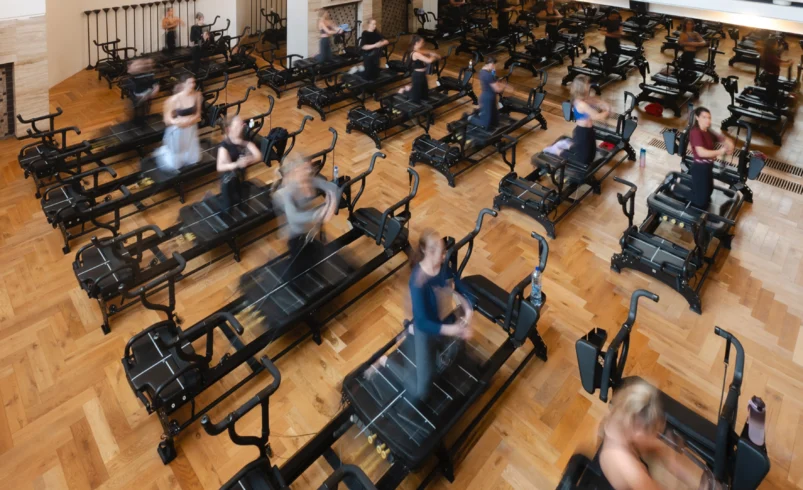
The Megaformer and similar reformer-style machines are commonly used in Lagree classes. They offer adjustable, spring-based resistance and a moving carriage, along with platforms and straps that support a wide range of low-impact exercises.
Instructors can scale the challenge by changing spring tension, speed, range of motion, and body position. The carriage movement and balance demands can make lighter loads feel very intense, especially for stabilizer muscles and core control.
Key benefits of the Lagree Method
A low-impact, high-intensity workout designed to challenge your muscles in new ways, Lagree blends strength, endurance, and control in one efficient session. It’s built to meet you where you are, while still pushing you to level up.
With consistent practice, Lagree may support:
- Full-body strength development through sustained tension and compound movements
- Improved muscular endurance from longer time under load
- Stronger core stability and posture support through constant stabilization work
- Joint-friendly conditioning because it avoids high-impact forces
- Higher overall workout intensity without running or jumping, which may support body composition goals when paired with a balanced routine
Results vary based on factors like resistance used, class frequency, recovery, and overall training plan.
Lagree vs Pilates: Understanding the differences
Lagree and Pilates both emphasize control, core engagement, precision, and breath. The biggest differences are usually intensity, resistance, and pacing.
Lagree often uses higher resistance and slower, continuous reps to maximize time under tension. Traditional Pilates more often focuses on movement quality, control, mobility, and flow, with less emphasis on sustained fatigue. Equipment can overlap (both may use reformer-style machines), but Lagree classes tend to keep intensity higher and rest shorter.
Lagree vs traditional strength training
Lagree differs from conventional weightlifting in how it uses load and rest. Traditional strength training often uses heavier weights, lower reps, and clear rest breaks to build maximal strength and muscle size. Lagree usually uses lighter-to-moderate resistance, higher reps, and minimal rest to maintain tension and fatigue over longer sets.
It also leans into full-body sequences and core integration rather than isolated heavy lifts. For goals like low-impact conditioning, endurance, and full-body work, Lagree can be a strong complement to lifting.
What to expect in a Lagree class
When you attend a Lagree class, it often starts with a quick equipment and tempo walkthrough, then moves through lower body, upper body, and core work. Classes usually run 45–50 minutes, with instructors guiding form, tempo, and breathing to maintain constant muscle tension.
You can expect your muscles to fatigue—and even shake—as they’re challenged under sustained tension. Most instructors provide modifications to make movements more accessible or more advanced. After class, light mobility work and proper hydration can help support recovery.
Who is the Lagree Method best for?
Lagree can be a good fit for people who want a high-effort workout without high-impact stress. It may work well for:
- Anyone looking for low-impact conditioning
- Athletes who want cross-training focused on muscular endurance
- People who prefer efficient, full-body sessions that combine strength and core work
If you’re returning from an injury or managing pain, ask your instructor for modifications and consider getting guidance from a professional first.
How to incorporate Lagree into a weekly routine
Many people do Lagree 2–4 times per week, depending on experience and recovery. Beginners may start with two classes weekly and add low-impact cardio and mobility work on other days. More experienced participants may increase frequency, while still planning recovery days.
When pairing Lagree with other training, balance your week with lighter aerobic sessions, mobility, and rest so your body has time to recover.
Common misconceptions about the Lagree Method
Lagree is often grouped with other low-impact workouts, which can lead to confusion about what the method actually involves. While it shares similarities with Pilates and other strength-based formats, Lagree follows its own distinct principles and training approach. Here are a few common myths, and the facts behind them:
“Lagree is only for advanced athletes.” Not true. Most Lagree classes can be scaled for beginners.
“Lagree is the same as Pilates.” While they share some foundational principles, compared to Pilates, Lagree is a distinct method with a stronger emphasis on sustained muscle tension and higher intensity.
“Low impact means low intensity.” Low impact doesn’t mean easy. Extended time under tension and minimal rest can make Lagree highly challenging.
“Shaking means you’re doing it wrong.” During Lagree, muscle shaking is often a normal response to fatigue. However, sharp or persistent pain isn’t; slow down, modify the movement, or ask your instructor for guidance if something doesn’t feel right.
Enhance your routine with the low-impact intensity of the Lagree Method
The Lagree Method blends slow, controlled movement with continuous resistance to deliver a high-intensity, low-impact workout that builds muscular endurance, core strength, and joint-friendly stability. By emphasizing time under tension and precise form, it challenges muscles deeply without the strain often associated with high-impact training. With proper technique and gradual progression, Lagree can complement a variety of fitness routines, whether you’re focused on strength, performance, or overall wellness.
Find Lagree classes near you and book your next workout on ClassPass.