
 0 Comments

Pilates and barre have a lot in common: both are low-impact, build strength and balance, and help you feel more connected to how your body moves. Where they differ is in the kind of challenge you get.
If you’re choosing between them, you should do the one you enjoy the most, because consistency beats perfection every time. In this blog, we’ll break down how Pilates and barre compare, what results you can expect from each, and how to decide which one fits your routine best.
Pilates vs barre
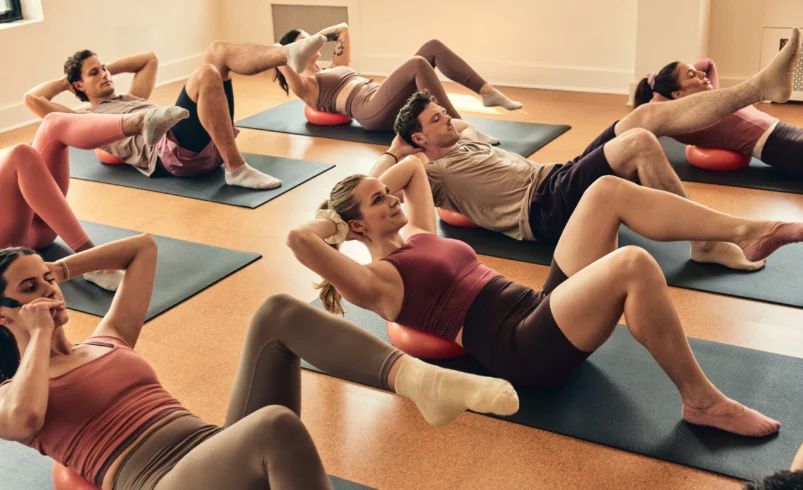
Pilates is core-first training built around alignment, control, and breath. Movements are precise and often use a bigger range of motion to build stability and mobility at the same time.
Meanwhile, Barre is ballet-inspired strength work that uses repetition and isometric holds (aka holding a position) to fatigue muscles quickly and build endurance.
Who each workout tends to work best for
Pilates is a good option for you if you want to prioritize core strength, posture, flexibility, and body awareness. It’s also a popular option for people looking for a supportive, low-impact way to rebuild strength (especially with the right instructor and modifications).
Barre, on the other hand, is the best choice if you want toning/sculpting, muscular endurance, and a quicker-paced burn—without heavy impact or jumping.
How to decide (without overthinking it)
Pilates is the best fit for you if your goal is to move with more control, improve posture, and build strength through your core.
Barre may be the better fit if you love a targeted focus on legs, glutes, and arms and enjoy the challenge of keeping muscles under constant tension.
And if you want the most well-rounded results, combining both can offer the best of both worlds—Pilates for a strong foundation and barre for muscular endurance and definition.
Key workout differences you’ll fill in class
While Pilates and barre are often grouped together as low-impact workouts, they create very different physical sensations once you’re in the room. The way you move, where you feel the burn, and how intensity builds can vary a lot depending on which class you’re taking.
Movement style and intensity
In Pilates, you’ll usually move more slowly and deliberately. The intensity comes from staying controlled—using breath, alignment, and deep engagement instead of momentum.
In barre, the moves can look tiny (pulses, lifts, holds), but they add up fast. The intensity often builds quickly because you’re doing a lot of repetition and spending more time in that “working” zone.
Muscles worked
Pilates targets deep stabilizers, especially:
- core (abs and back)
- glutes and hips
- inner thighs
Barre tends to emphasize:
- glutes and thighs
- calves
- arms
- outer hips and core stability
Think of it this way: Pilates trains your body like a strong “support system.” Barre trains your muscles to keep working when they’re tired.
Cardio level and calorie burn
Most Pilates classes keep your heart rate relatively steady and lower, though faster mat flows can still feel challenging.
Barre can bring your heart rate up a bit more especially with quicker transitions or full-body sequences. However, it’s still not a traditional cardio workout.
Bottom line: calorie burn varies a lot based on class style, instructor pacing, and your effort. Neither is mainly cardio, but both can support a well-rounded fitness routine.
Learning curve and coordination
Pilates and barre also differ in how intuitive they feel when you first start. The learning curve, and where the challenge shows up, can shape how quickly you feel comfortable in class.
Pilates can feel more technical at first because the details matter. You’re asked to pay attention to things like rib placement, breath patterns, and pelvic stability, often while moving slowly and with control. That focus can feel subtle or even tricky early on, but once it clicks, the payoff is noticeable—stronger core engagement, better coordination, and a clearer sense of how your body moves as a whole.
Barre, on the other hand, is usually easier to follow on day one. The movements are straightforward and often set to a clear rhythm, which makes it simple to jump in and keep up. But don’t let that fool you. The challenge ramps up quickly. Longer holds, small pulses, and stacked repetitions create an intense muscle burn that builds fast and lingers, especially in the legs, glutes, and arms.
Results: What each workout tends to deliver
Both Pilates and barre can deliver visible and functional results, but they tend to shape strength and muscle tone in different ways. How your body responds often depends on the type of effort each workout emphasizes and how consistently you practice.
Muscle tone and body shape
Pilates builds functional strength and a “long, lean” look by improving control, stability, and range of motion.
Barre often creates more obvious “sculpt” results because it’s heavy on time-under-tension (holds + pulses + high reps).
Quick reality check: neither workout can change one spot only. Visible definition depends on genetics, nutrition, recovery, consistency, and what else you do.
Core strength and posture
This is where Pilates really shines. It’s known for training the deep core muscles that support your spine, which can translate to better posture and more stable movement in everything from walking to lifting.
Barre also strengthens your core, especially through posture cues and sustained holds, but it often focuses more on outer-core endurance than deep stabilizers.
Flexibility and mobility
Pilates improves mobility through controlled spinal movement and intentional stretching paired with stability (so you’re not just flexible, you’re strong in your range).
Barre can improve flexibility too, usually more gradually, as you build strength in deeper positions (hips, hamstrings, calves often get a lot of love).
Athletic and everyday benefits
Beyond how they look or feel during class, Pilates and barre can influence how your body performs in everyday movement and athletic training.
- Pilates can support athletes training for a sport by improving balance, alignment, and efficient movement patterns—great for runners, lifters, and even those who sit a lot
- Barre builds muscular endurance and joint stability, which shows up in daily life: stairs feel easier, posture holds longer, legs fatigue less quickly.
Weight loss, difficulty, and what “hard” really means
When people compare Pilates and barre, questions about weight loss and workout intensity usually come up fast. The reality is that “hard” can mean different things depending on whether you’re talking about sweat, burn, control, or long-term results.
Weight loss and afterburn
Neither Pilates nor barre is designed for rapid weight loss or a huge afterburn effect on its own. That said, both can support weight-related goals because they:
- build strength (helpful long-term)
- are repeatable and low-impact (easier to stay consistent)
- pair well with walking, cardio, strength training, and nutrition habits
Which one feels harder
- Barre often feels harder in the moment because that burn builds fast with holds and pulses.
- Pilates can feel harder in a different way, because staying controlled, breathing well, and keeping perfect form is sneaky tough.
Beginners: Which is easier to start?
Both Pilates and barre can work well for beginners. Deciding which one to choose is more about the class style and instructor than the method.
- Pilates is very beginner-friendly when foundations are taught clearly and modifications are offered. You may feel progress quickly as you learn to engage the right muscles.
- Barre is easy to jump into and usually delivers instant feedback (“Oh, I feel that”). It can also be intense if the holds are long.
If you’re brand new, pick the option that makes you feel most supported, not overwhelmed.
Safety and special considerations
Pilates and barre are generally joint-friendly when done with good instruction and alignment. The biggest safety rule is simple: don’t push through sharp pain, and take modifications when you need them.
- Back pain: Pilates is often recommended because it strengthens the muscles that stabilize the spine. Barre can work too, but you’ll want strong form cues to avoid over-arching the low back.
- Knees, hips, and pregnancy: both can be modified. If you’re pregnant, injured, or returning after time off, getting medical guidance and letting your instructor know before class is a smart move.
What results to expect and when
Results depend on frequency, intensity, sleep, nutrition, and your starting point, but many people notice:
- ~2 weeks: better body awareness, more energy, less stiffness
- ~1 month: improved core control, posture, and flexibility
- ~3 months: more noticeable definition, endurance, and stability
- long-term: stronger movement patterns, better balance, and more resilience
Combining Pilates and barre (best of both)
Doing Pilates and barre is a great strategy because they complement each other:
- Pilates: core stability + mobility + alignment
- Barre: endurance + sculpting + targeted burn
A simple weekly rhythm:
- 2–3 Pilates sessions
- 2–3 barre sessions
- 1–2 easier/recovery days, depending on intensity
Short on time? Even 1 Pilates + 1 barre per week is a strong start.
Choose with option is best for you
Pilates and barre each offer powerful benefits, but they deliver them in different ways. Pilates is ideal if you’re looking to build deep core strength, improve posture, increase mobility, and move with more control through a technique-driven practice.
At the end of the day, the best workout is the one you’ll actually enjoy and stick with. With ClassPass, you don’t have to choose just one. You can try Pilates, barre, or both at studios near you, making it easy to explore each style, see how they feel in your body, and build a routine that truly works for you.
Find Pilates and barre classes near you on ClassPass.