
 0 Comments

Pilates is a popular low-impact exercise method known for building strength, improving posture, and enhancing flexibility without putting stress on your joints. Developed in the early 20th century, Pilates emphasizes controlled movements, core strength, and breathwork.
This method has gained widespread popularity for its ability to improve flexibility, strength, balance, and coordination. Pilates is also known for its holistic benefits, supporting both physical and mental well-being. Its adaptable nature makes it suitable for many fitness levels, from beginners to experienced athletes, and for goals ranging from general fitness to rehabilitation.
This guide provides an in-depth look at Pilates, covering its origins, core principles, key modalities, and the benefits it offers.
What does Pilates entail?
Pilates entails performing precise, controlled movements that engage deep core muscles. The practice emphasizes both strengthening and lengthening muscles, supporting a balanced physique.
A key component of Pilates is the mind-body connection, which asks practitioners to stay present and focused on each movement. This focus improves movement quality and overall results.
Why is Pilates so popular?
Pilates is popular because it’s versatile and can work for many fitness levels. It offers a holistic approach to wellness by building physical strength and mental focus. The practice can support different goals, from general fitness to rehabilitation and athletic conditioning. Many people also find Pilates helpful for improving posture and easing discomfort.
The origin story of Pilates
Pilates was developed by Joseph Pilates in the early 20th century. He was born in Germany in 1883 and experienced childhood health issues, including asthma and rickets. These challenges motivated him to focus on physical strength and overall well-being. He created his exercise method, originally called “Contrology,” which would later be known as Pilates. He designed Contrology to help restore fitness and support recovery, physical, and mental health.
During World War I, Joseph Pilates was interned in England, where he began applying his methods.
He developed exercises for fellow internees, especially those confined to bed due to illness or injury. He also used hospital beds and springs to create early resistance equipment, often adapting available furniture. This early work showed how the method could support rehabilitation and strength in difficult conditions.
Joseph Pilates’ vision
Joseph Pilates drew influence from several disciplines, including yoga, gymnastics, and martial arts. He combined these influences with his understanding of anatomy to create Contrology. Contrology emphasized the mind’s control over the body. Joseph Pilates believed physical fitness, mental clarity, and effective breathing were connected.
Evolution of the method
Joseph Pilates immigrated to the United States in the 1920s and opened a studio in New York City. His studio attracted dancers and athletes who wanted to build strength and recover from injuries.
These early students and teachers, often called “elders,” helped spread the method. Over time, Pilates gained global recognition
and expanded far beyond the dance world. The method has continued to evolve, often incorporating modern biomechanics while keeping its core principles.
What are the foundational principles of Pilates?
The Pilates method is guided by six foundational principles that support safe and effective practice: Centering, Concentration, Control, Precision, Breath, and Flow. These principles work together to create a complete, mindful exercise experience that sets Pilates apart from many other forms of movement.
Understanding and applying these principles helps practitioners get more from each session. For example, engaging the deep core (Centering), staying focused (Concentration), moving with accuracy (Precision), and coordinating breath (Breath) all raise the quality of each exercise. These tenets aren’t optional add-ons; they sit at the center of the Pilates method. When practiced consistently, they build body awareness, strength, control, and functional movement over time.
These principles apply across all Pilates exercises, no matter the style or equipment used. Joseph Pilates designed them to be universal across the system, with an emphasis on intelligent movement. They also encourage quality over quantity, helping the body relearn efficient, supported movement patterns. Skipping or ignoring any principle can reduce the effectiveness of the practice.
Centering
Centering refers to focusing on the “powerhouse”, the area between the lower ribs and hips. This powerhouse is considered the starting point of movement in Pilates. Engaging the core supports the spine and helps the body move efficiently. Many Pilates exercises are designed to begin from this center.
Concentration
Concentration means giving full mental focus to each movement. This principle strengthens the mind-body connection. Practitioners are encouraged to notice what their body is doing and how it feels. Staying present helps each exercise work as intended.
Control
Control emphasizes moving with steady intention rather than using momentum. Each action is performed with stability and awareness. This principle prioritizes movement quality over speed or high reps. Controlled movement can also help reduce injury risk while building strength.
Precision
Precision requires careful alignment and consistent form. This principle focuses on how you move, not just completing the movement. Attention to detail helps muscles work more effectively and reduces compensation. Over time, precise practice supports better results and safer movement.
Breath
Breath in Pilates often uses lateral breathing, where the rib cage expands outward to the sides. This approach helps maintain core engagement during movement. Breath is coordinated with exercises to support control and endurance. Effective breathing can improve performance and help the body stay relaxed.
Flow
Flow refers to smooth, continuous transitions between exercises. Pilates movements are designed to feel controlled, connected, and fluid. This principle supports rhythm and purposeful pacing from one exercise to the next. Flow can build stamina and create a cohesive workout experience.
Core characteristics of Pilates
Pilates is known for its strong emphasis on core strength, often called the “powerhouse.” This focus on deep stabilizing muscles helps set it apart from many other fitness methods. Pilates is also commonly practiced through two main modalities: mat Pilates and equipment Pilates, each offering different ways to train.
Mat Pilates uses an exercise mat and body weight for resistance, making it accessible and portable. Equipment Pilates uses specialized machines like the Reformer, which add spring-based resistance and support.
Mat work can feel more challenging for core stability, while equipment can assist or increase resistance based on the setup. Equipment classes often require a studio and may cost more than mat classes.
Both approaches are designed to build strength, improve flexibility, increase control, and support body awareness. Mental focus is a key part of the method, so exercises are done with purpose rather than rushing through reps. Pilates prioritizes deliberate, controlled movement that targets stabilizers and supports alignment. This approach can be helpful for injury prevention and rehabilitation
Mat Pilates vs. reformer Pilates
Mat Pilates and reformer Pilates, are widely taught and often the starting point for many people.
Beyond these, studio apparatus such as the Cadillac (Trapeze Table), the Wunda Chair, and different barrels add more variety and targeted options. Each modality still uses the same Pilates principles, building strength, flexibility, and control through different types of resistance and support.
The best fit often depends on a person’s goals, physical needs, and access to equipment. Mat Pilates relies on body weight and gravity, while equipment introduces springs, pulleys, and levers to assist or challenge movement.
This variety makes Pilates adaptable for a wide range of people, from those focused on gentle rehab and mobility to athletes training for performance and injury prevention. Exploring different modalities can also reveal just how broad and flexible the Pilates system really is, and with ClassPass, you can easily try different Pilates class types at studios near you to find what works best for your body.
What is mat Pilates?
Mat Pilates is a series of exercises performed on an exercise mat. Body weight provides the main resistance. Because there’s no external support, it requires strong core engagement and body control.
Mat Pilates is accessible and needs minimal equipment and space. It’s also portable, which makes it easy to practice in many settings. Exercises range from beginner fundamentals to advanced sequences.
What is reformer Pilates?
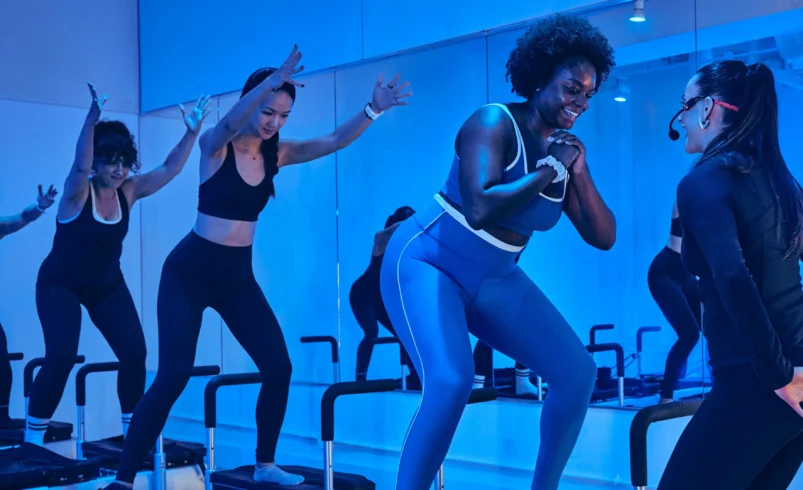
Reformer Pilates uses a machine called the Pilates reformer. The reformer has a sliding carriage, springs, ropes, and pulleys. These parts create adjustable resistance that can assist or challenge movement.
The reformer supports a full-body workout and can target muscles in many ways. It can be adapted for different fitness levels and is often used for rehabilitation and athletic training.
Pilates vs. yoga
Pilates and yoga are two distinct exercise methods that share some similarities but differ in origin, structure, and primary focus. Pilates is a type of low-impact strength-focused system that emphasizes core stability and controlled movement, while yoga is a type of mind-body practice that combines physical postures, breathing techniques, and often meditation.
Pilates generally prioritizes strengthening the deep stabilizing muscles of the core, improving posture, and refining movement mechanics. Yoga typically emphasizes flexibility, balance, and breath awareness, and many yoga styles include a philosophical or meditative component. Pilates sessions often follow a structured sequence of exercises with defined principles such as control and precision. Yoga classes vary widely by style, with some forms focusing on slow, sustained poses and others on more continuous movement.
Pilates is not a form of yoga; Pilates is a separate exercise system developed in the 20th century with its own method and equipment. Both practices can support strength, mobility, and body awareness, but the experience and goals of each method may differ depending on the class format and individual approach.
For a more detailed comparison of Pilates and yoga, including key differences in structure, benefits, and typical class formats, see the dedicated article on Pilates vs. yoga.
Other common Pilates equipment
Many studios also use additional apparatus beyond the Reformer.
- The Cadillac, also called the Trapeze Table, is a large frame with bars and springs and supports a wide range of exercises.
- The Wunda Chair is compact and can be very challenging for strength and balance.
- Barrels, such as the Spine Corrector and Ladder Barrel, support spinal movement and flexibility.
- Each piece of equipment offers specific ways to train different areas of the body.
The comprehensive benefits of practicing Pilates
Pilates offers benefits that go beyond general fitness, including physical improvements, mental well-being support, and therapeutic applications. Its holistic approach can support better movement, better body awareness, and a stronger mind-body connection.
With consistent practice, people often notice lasting changes in how they feel and move. The focus on breathing and attention during exercise can support stress management and mental clarity. Pilates is also low-impact, which can make it a good option for many populations, including people returning from injury or managing chronic discomfort. The benefits come from applying the Pilates principles with intention and consistency.
Pilates isn’t only about strengthening isolated muscles; it aims to create balance, stability, and efficient movement across the whole body. Over time, this approach can support day-to-day function and overall quality of life.
Physical health advantages
Pilates can increase core strength, which supports the body as a whole. It can improve flexibility and mobility by training joints and muscles through controlled ranges of motion. Pilates can also support posture and balance through improved alignment and stability.
It builds muscle tone and endurance without focusing on bulk. Many people report less back discomfort and better movement in sports and daily life.
Mental well-being advantages
Pilates can support mental well-being through concentration and breath control. The focused, mindful nature of the practice can help reduce stress and encourage relaxation. It can also improve attention by requiring presence and coordination during movement. Over time, the mind-body connection developed in Pilates can support greater awareness and clarity.
Rehabilitation and injury prevention
Pilates is low-impact, which can make it suitable during recovery or return-to-movement phases. It uses targeted strengthening to support joints and improve stability in vulnerable areas. Many healthcare professionals recommend Pilates as part of a post-rehab plan to restore function and reduce the chance of reinjury.
It can be especially supportive for spinal alignment and the muscles that stabilize the trunk.
Understanding different Pilates styles
Pilates has evolved into several styles, each with its own approach to the original method. Common categories include Traditional (Classical) Pilates, Contemporary Pilates, and Clinical (Rehabilitative) Pilates.
While all styles use core Pilates principles, they can differ in exercise selection, sequencing, cueing, and how much modification is used. Understanding these differences can help practitioners choose a style that fits their goals, needs, and preferences. Some styles closely follow the original repertoire and order, while others incorporate modern movement science and updated biomechanics.
This evolution shows how Pilates can stay relevant across different populations and settings. The range of styles also makes Pilates more accessible, helping more people find a practice that works for their body and their objectives.
Traditional Pilates
Traditional or Classical Pilates follows Joseph Pilates’ original method closely. It uses a set sequence of exercises and specific transitions. Movements are performed in the order Joseph Pilates intended, with limited modification.
This style often emphasizes the original design and purpose of the apparatus.
Contemporary Pilates
Contemporary Pilates blends the original method with modern biomechanics and exercise science. It often adapts exercises to better suit individual needs and current understanding of movement.
It may include variations in exercise choice and sequencing, with more flexibility in programming. Contemporary Pilates keeps the core principles while expanding how they’re applied.
Clinical/Rehabilitative Pilates
Clinical or rehabilitative Pilates is often used by physical therapists or medically trained professionals. It focuses on injury recovery, prevention, and managing chronic conditions. Programs are usually personalized to address specific needs and limitations. It emphasizes precise movement to restore function and support long-term physical health.
How to get started with Pilates
Starting Pilates can be a pivotal first step toward improved movement, strength, and mental focus. Choosing the right class, studio, and instructor can make the experience more supportive and effective.
Beginners benefit most from learning the foundations and progressing gradually. It helps to set realistic expectations, since many Pilates benefits build over time with consistency. Pilates rewards precision and body awareness more than intensity or speed.
Finding an instructor who provides clear feedback can also be especially helpful early on. Good guidance supports safer form, better technique, and a stronger understanding of the method.
Finding the right class
Choosing the right class starts with deciding between Mat or reformer, access to equipment and personal preferences. Mat classes rely on bodyweight and are often more accessible, while reformer classes use specialized equipment to add resistance and support. Beginners should look for classes labeled “introductory” or “beginner-friendly” which typically move at a slower pace and focus on foundational movements. It’s also important to choose classes led by qualified, certified instructors, as proper guidance helps ensure safe form, correct alignment, and a more effective Pilates experience overall.
Tips for beginners
Beginners should start slowly and focus on learning the fundamentals before pushing intensity. Paying attention to how your body feels during each movement is key, especially in Pilates, where control and alignment matter more than speed. Prioritizing good form over high reps or advanced exercises helps build strength safely and reduces the risk of injury.
Consistency is also more important than duration or intensity. Shorter, regular sessions tend to deliver better long-term results than occasional all-out workouts. Progress may feel subtle at first, but patience pays off, as strength, flexibility, and coordination build gradually over time. With steady practice and realistic expectations, beginners often find Pilates becomes more effective and enjoyable the longer they stick with it.
What to expect in a Pilates class
A typical Pilates class emphasizes controlled, intentional movement rather than high-speed or high-impact exercise. You’ll move through a series of exercises designed to build strength, stability, and flexibility, often at a slower, more deliberate pace. This allows you to focus on precision, alignment, and breath throughout each movement.
Class size can influence the experience. Smaller group classes or private sessions often provide more individualized attention, with instructors offering hands-on adjustments or personalized cues. Regardless of format, instructors usually give detailed guidance on form, breathing, and muscle engagement to help you get the most out of each exercise. Throughout the session, expect a consistent focus on the mind-body connection, encouraging awareness, control, and purposeful movement from start to finish.
Experience Pilates in a way that works for you
Pilates offers a focused, holistic approach to fitness that supports both the body and the mind. With its emphasis on core strength, breath, and controlled movement, Pilates can deliver meaningful benefits for overall well-being. Exploring Pilates can be a practical step toward better movement, strength, and body awareness and an easy next step is booking a class through ClassPass.